
Motor Starting Analysis &
System Impact Studies
Guarantee smooth plant operations. We ensure your large motors start reliably without causing system-wide voltage sags that disrupt sensitive equipment or trigger cascading failures.
Production Downtime
A failed motor start stalls critical processes instantly, leading to significant financial losses and wasted raw materials.
Voltage Collapse
Severe voltage dips can trip PLCs, control systems, and other running motors, causing a facility-wide blackout.
Asset Damage
Extended low-voltage starts cause motors to stall and overheat, permanently damaging insulation and reducing lifespan.
Engineering
Methodology
From torque verification to voltage dip mitigation.
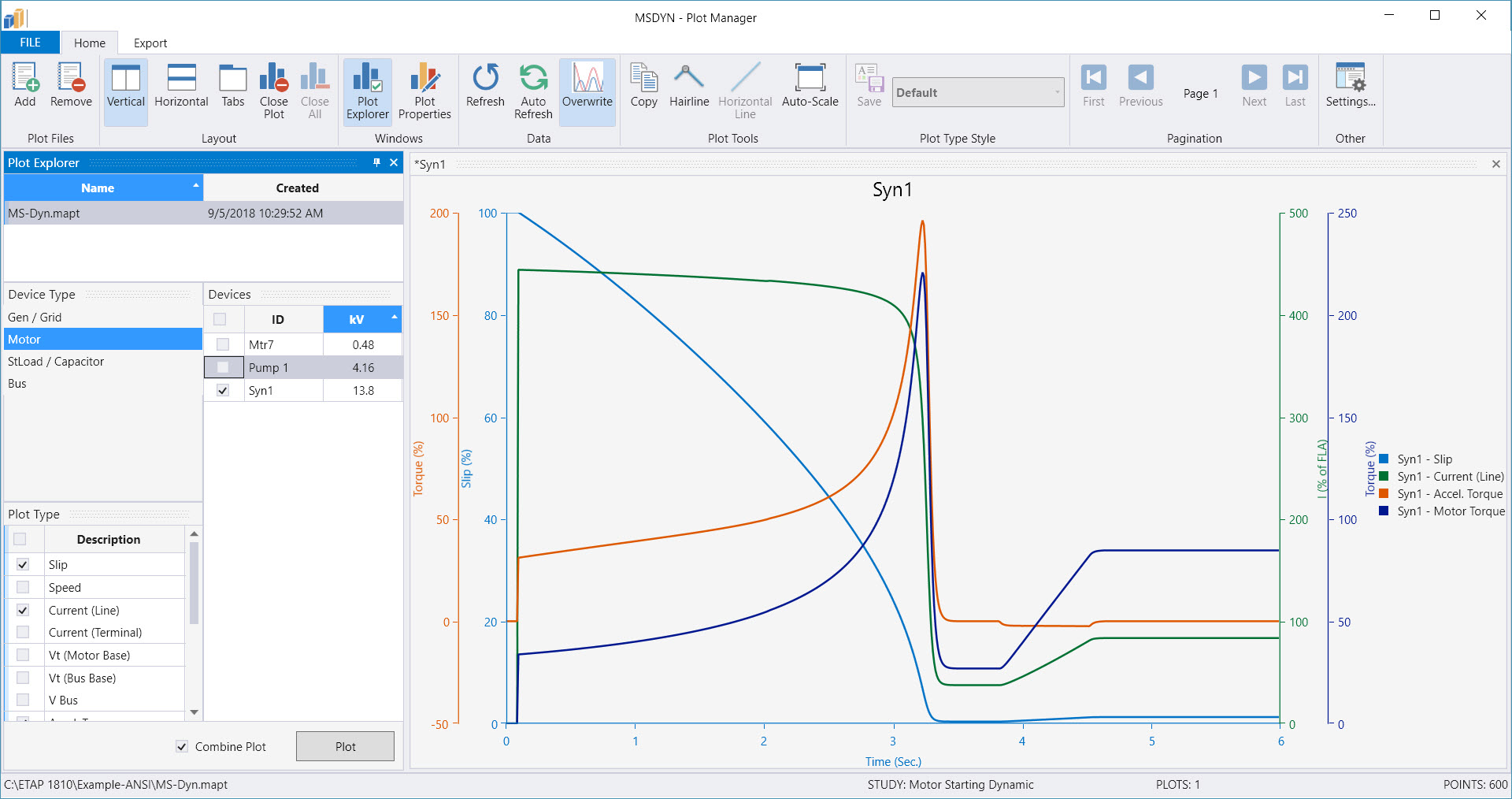
Analysis Output
- Dynamic Motor Starting Simulation Report
- System-Wide Voltage Dip Profile Analysis
- Motor Speed-Torque & Current-Time Curves
- Soft Starter / VFD Parameter Settings
- Thermal Limit & Acceleration Verification
- Recommendations for System Strengthening
Motor & Load Modeling
We build a dynamic model integrating specific inertia (WK²) and speed-torque curves for both the motor and the driven load (pump, fan, conveyor) to replicate real-world physics.
Voltage Dip Simulation
We simulate various starting methods (DOL, Soft Start, VFD) to predict the exact magnitude and duration of voltage sags at every bus in your facility.
Acceleration Analysis
We verify that the motor produces sufficient torque to accelerate the load to full speed within its thermal damage curve limits, ensuring a safe start.
Optimization & Settings
We determine the optimal tap settings for auto-transformers or ramp profiles for soft starters to minimize system impact while guaranteeing successful acceleration.
Engineer a Flawless Start.
Eliminate start-up uncertainty. Secure your facility's power quality today.
Get Analysis Quote